
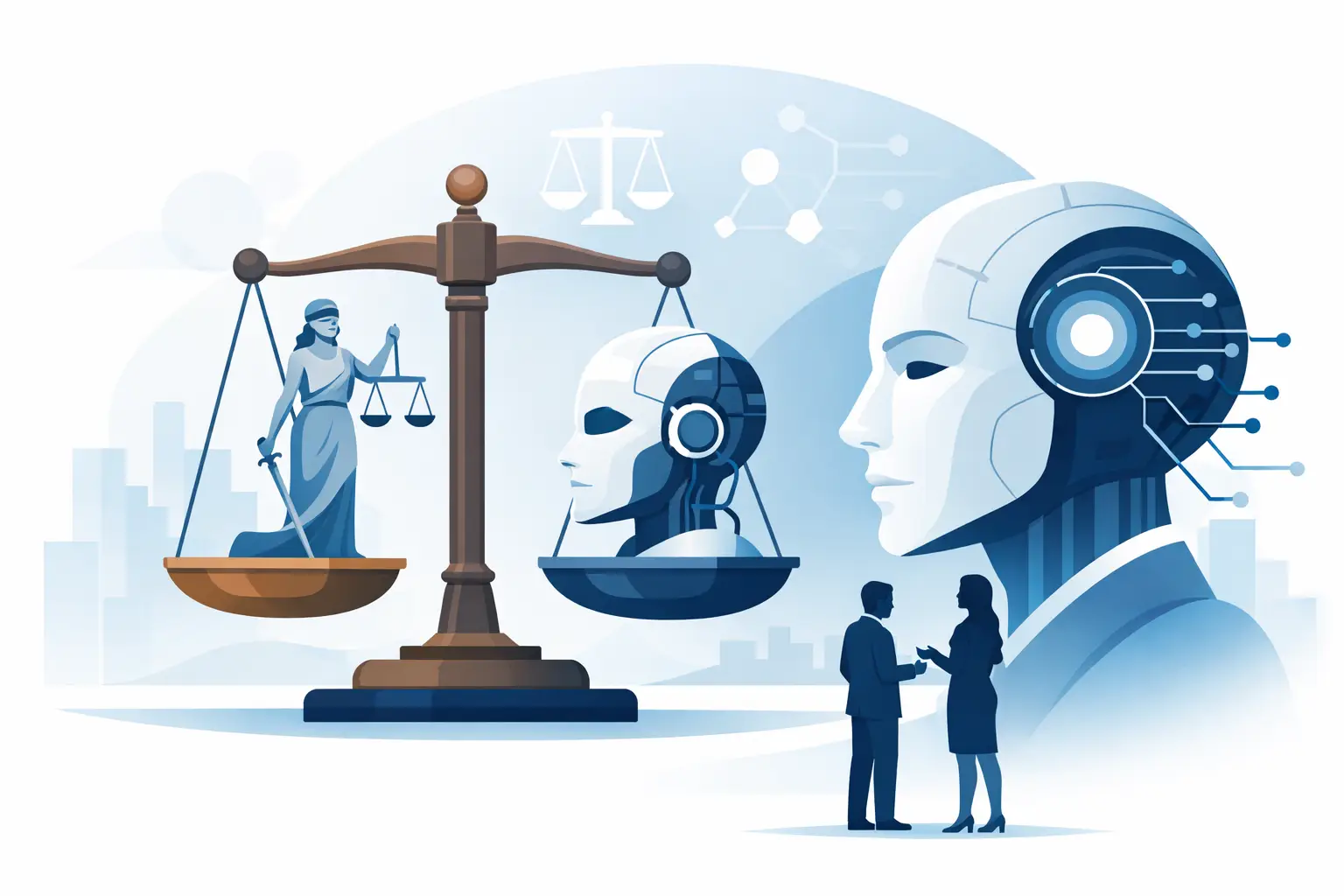
A solicitor files submissions supported by authorities generated through an AI tool. Two citations are wrong, one proposition is overstated, and none of it is caught before filing. The problem is not simply technical failure. It is a failure of professional judgement. That is why legal ethics in the use of artificial intelligence has moved from academic debate to daily practice.
For legal professionals working with Hong Kong law, the issue is especially sharp. Research is jurisdiction-specific, procedural expectations are high, and the margin for error is narrow. AI can reduce hours of manual search, surface relevant passages faster and improve early-stage analysis. It can also introduce risk at speed. The ethical question is not whether AI belongs in legal work. It is how to use it without weakening duties that remain entirely human.
Why legal ethics in the use of artificial intelligence matters now
The profession has always adopted tools that improve efficiency. The ethical line is crossed when efficiency starts displacing verification, competence or independent analysis. AI changes the pace and scale of legal work, but it does not change the underlying duties owed to clients, the court and the profession.
That distinction matters because AI outputs can look finished before they are reliable. A summary may appear precise while omitting a limiting fact. A suggested authority may be relevant in theme but weak on ratio. A generated answer may compress a difficult statutory history into something cleaner than the law allows. In each case, the risk is not just factual inaccuracy. It is misplaced confidence.
For practitioners and legal teams, the ethical challenge is operational. If AI becomes part of the workflow, then supervision, verification and source checking must become part of the workflow too. Good ethics in this context is less about abstract principle and more about disciplined process.
The core duties that AI does not change
Competence still includes understanding the tool
A lawyer does not need to become a machine learning engineer to use AI responsibly. They do need to understand what the system is designed to do, where it performs well, and where it is likely to fail. That includes knowing whether the tool retrieves primary sources, generates free-text analysis, summarises judgments, or combines these functions.
Competence also means recognising the difference between relevance and authority. An AI system may identify semantically similar cases, but similarity is not determinative weight. A useful result still needs legal evaluation. The more persuasive the interface, the more important that distinction becomes.
Confidentiality remains non-negotiable
Confidentiality issues arise the moment users enter client facts, draft submissions or sensitive strategy into a system without understanding how that data is processed. Some tools are designed for secure professional use. Others are not. The ethical burden sits with the user and the organisation to know the difference.
This is not merely an IT procurement point. It goes directly to professional obligations. If a team cannot explain what data is being uploaded, retained or used for model training, then caution is not optional. In many matters, anonymisation may be necessary. In others, external AI use may be inappropriate altogether.
Duty to the court cannot be delegated
Courts expect authorities to be real, propositions to be properly supported and submissions to reflect the law as it stands. AI does not dilute that expectation. If anything, the use of generative tools raises the standard for internal checking because the failure mode is now broader than a missed case. It includes fabricated citations, distorted holdings and apparently polished reasoning that lacks legal foundation.
This is why traceability matters. If an AI-assisted workflow cannot show where a proposition came from, what judgment supports it and whether the extract is contextually faithful, it is ethically weak. Professional work product must remain auditable.
Where the practical risks usually appear
Most ethical failures in AI-assisted legal work do not begin with bad intent. They begin with convenience. A user asks for a quick answer, accepts a strong-sounding summary, and treats it as research rather than a starting point.
The first common risk is hallucination, but the deeper issue is reliance. False cases and invented quotations are obvious failures when spotted. More difficult are partial truths – real cases described too broadly, statutory provisions presented without amendment history, or principles detached from procedural context.
The second risk is over-compression. Legal questions often turn on narrow distinctions. A concise AI summary may save time, but it can also flatten those distinctions. In Hong Kong legal research, point-in-time accuracy, court level, treatment history and statutory wording all matter. A short answer that misses one of these can still mislead.
The third risk is hidden inconsistency. Different users may prompt the same system differently and receive varying outputs. That creates a governance issue for legal teams. If no standard method exists for checking, citing and escalating uncertain outputs, quality becomes uneven.
Building an ethical AI research workflow
The most reliable approach is not to ban AI or trust it blindly. It is to define where it adds value and where human review is mandatory.
AI is well suited to accelerating the front end of research. It can help identify likely authorities, extract key passages, map related concepts and shorten the path to relevant material. That is valuable, particularly when a matter starts with broad factual complexity rather than neat keyword queries.
But once a potentially relevant authority is identified, the workflow must return to primary sources. The judgment needs to be read in context. The proposition must be tested against the actual reasoning. Legislative material must be checked in the correct temporal version. Ethical use depends on this hand-off from AI assistance to lawyer verification.
For teams, written protocols help. A sensible protocol usually answers a few practical questions. What types of matter can use AI at all? What information may be entered? Which outputs require source verification? When must a supervising lawyer review the result? These are not administrative extras. They are how ethical standards become repeatable.
Training matters as much as policy. Junior lawyers and students may be fastest to adopt AI tools, but speed without research discipline creates risk. They need clear instruction that AI-generated summaries are not substitutes for reading the case, and that semantically relevant material is not automatically binding or persuasive in the required way.
What good tools should make easier
Ethically sound AI use is easier when the system is built for legal research rather than generic text generation. That means prioritising source-grounded outputs, visible citations, jurisdictional precision and transparent links between answer and authority.
In practice, a strong legal AI platform should help users move quickly from question to source, not trap them in unverified prose. It should support checking rather than discourage it. Features such as citation support, key passage extraction and point-in-time legislative reference are not merely productivity benefits. They reduce ethical risk because they keep the research trail visible.
That is where specialist systems have a clear advantage over general-purpose AI tools. For professionals dealing with Hong Kong law, precision is not a luxury. It is part of competent practice. Platforms such as Common Laws.ai are useful precisely because they are designed around jurisdiction-specific legal materials and research verification, rather than around generic answer generation.
Legal ethics in the use of artificial intelligence is really about control
The central question is not whether AI can assist legal work. It plainly can. The real question is whether the lawyer remains in control of accuracy, context and judgement. If the answer is yes, AI can strengthen legal research by reducing friction and helping professionals reach relevant authorities faster. If the answer is no, efficiency is being purchased at the expense of duty.
That balance will differ by task. Early issue spotting allows more room for experimentation. Citation checking, final advice and court-facing submissions allow much less. It depends on the stakes, the sensitivity of the matter and the reliability of the underlying source base.
The profession does not need grand statements about machines replacing lawyers. It needs better standards for how lawyers use machines. In practice, that means secure systems, source-based workflows, trained users and disciplined supervision. Used that way, AI is not an ethical shortcut. It is a research instrument that still requires professional hands.
The firms and legal teams that benefit most from AI will not be the ones that use it most casually. They will be the ones that use it with the highest level of control.
Leave a Reply